Showing posts with label Ethiopia. Show all posts

Christina Feldt: Travel Photography

Photo © Christina Feldt-All Rights Reserved

"As far back as I can remember, I have been fascinated by other cultures, faces, customs and ways of living."


And this is in essence how Christina Feldt started her photographic career. She was not joking...she writes me that she's just back from a 9 months trip through Mongolia, Myanmar, SE Asia and Ethiopia; a trip that generated enough galleries to occupy its viewers for quite some time. She has also established a Photoshelter website which you can view here.

I've gone through most of them...starting with Ethiopia, Myanmar, Indonesia, Laos, Cambodia, Mongolia, Bangkok and Singapore, and when I got to Vietnam...I paused at Christina's lovely photographs made against the yellow walls of Hoi An.

That done, I read the compelling blog post she wrote about Mai, a 31-year old Hmong woman from Sapa, who told her that her dream was to see the ocean and to be able to read and write, so she could read the text messages on her cellphone.

It's no surprise that I stopped at her Vietnam gallery...after all, this is my forthcoming destination where I'm holding a 15-days photo-expedition/workshop, and her photographs serve to reinforce the 'visuality' of Vietnam and its people.

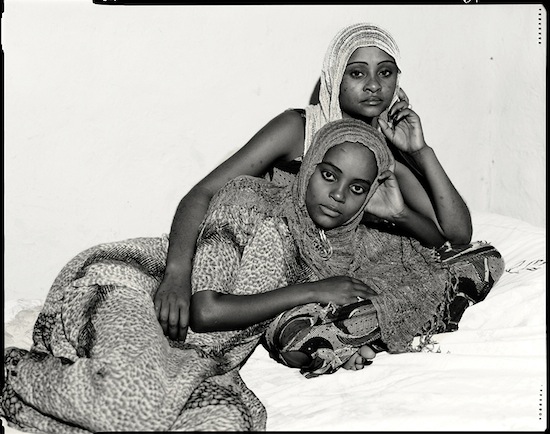
Christian Witkin: Ethiopia

Photo © Christian Witkin-All Rights Reserved

"You can read people's faces, you can see how they treat themselves, what kind of lives they live, it's all in the exterior." 

Here's the work of Christian Witkin, a Brooklyn-based photographer known for his advertising and editorial work for major publications, who's now returning to fine art, the foundation of his personal photographic work.

His current projects include a massive 16-year study of India, Women, Ethiopia and a Thai Ladyboy project. I was curious to see how an advertising, celebrity and fine art photographer would depict the beauty of the Ethiopian people, and you can judge for yourself how well he's done it.

I was very interested to read in article on Cool Hunting as to how Christian took a medium format camera to 14th Street (which is one of my favorites spots for street photography) in order to build his portfolio, and that he now uses a 4 x 5 Linhof Technika (a large format camera system) when he travels. He also espouses the style of rarely cropping his photographs.

The Thai Ladyboy portraits are also masterfully photographed and composed.


Mitchell Kanashkevich: Ethiopia

Photo © Mitchell Kanashkevich-All Rights Reserved

“Will I ever come back to Ethiopia?”

A question asked by Mitchell Kanashkevich after spending over four months in that country, crisscrossing it on a motorbike.

He doesn't ask it because of logistics, or because of practicalities...but rather he wonders if he would want to ever come back to Ethiopia. I chose to feature his post to counter balance my earlier post on Holland Cotter's Ethiopian experience because they are so divergent.

I won't go into the details of Mitchell's reasons for his largely negative personal experiences in Ethiopia since you can read it directly on his blog, but these range from onerous restrictions and regulations imposed by authorities to make some money off foreign visitors to "money hungry scheming locals" in Lalibela and other religious towns.

Mitchell Kanashkevich is amongst a handful of travel photographers who are truly intrepid, experienced and who produce consistently excellent imagery, so his experiences in Ethiopia ought to be heeded by independent travelers who want to visit Ethiopia the way he did. I'm not suggesting that travelers ought to be put off by his current mindset, but they certainly ought to pay attention to what he tells us...and prepare themselves for potential difficulties.

It is one thing to travel to Ethiopia (and wherever else) on assignment with The New York Times, and quite another to travel the way Mitchell did. Fixers, hotel accommodations, transportation are a world apart between these two.

As for the obnoxious and puerile comments that Mitchell's post seems to have generated, it's unfortunate. Some people don't realize the service that Mitchell has provided...they may disagree with it, they may not like it...but he related his personal experience, and he's free to express it as he sees fit...wherever and whenever he wants.

I traveled to Ethiopia in 2004, and my experience was different. But that was 8 years ago, and I traveled differently. However if I were to return to Ethiopia, I'd reread Mitchell's post very carefully.

The New York Times: Aksum & Lalibela

Photo © Damon Winter-Courtesy The New York Times

Here's what I found to be a very well made (and thoroughly researched) feature by The New York Times titled Aksum And Lalibela: A Pilgrimage with the prose of Holland Cotter and the photography of Damon Winter.

"Lalibela was conceived as a paradise on earth."

Cotter tells us that he had longed to see two holy cities in Ethiopia: Aksum, the country's center of Orthodox Christianity, and Lalibela, a town of extraordinary churches carved from volcanic rock in the 13th century, for a long time and he did visit it recently.

The treat in this interactive feature are the panoramas of Gondar, the monasteries of Lake Tana and Lalibela. I was in Ethiopia in 2004, and these panoramic views brought it all back to me as nothing else could. I wasn't very impressed by Gondar then, but the majesty of Lalibela churches and the beauty of the reclusive monasteries of Lake Tana made my experience in Northern Ethiopia exceptionally memorable.

An exceptionally engaging article by Holland Cotter is here. He has been a staff art critic at The New York Times since 1998. Don't miss Damon Winters' dozen photographs of Lalibela, Aksum, and Gondar which accompany the articles.

And since I mentioned that I've been in that region some 8 years ago, drop by my own gallery Footsteps In Abyssinia. Oh, how I wish I had my multimedia knowledge and tools then!!!

Mitchell Kanashkevich: Orthodox Christmas In Lalibela

Photo © Mitchell Kanashkevich: All Rights Reserved
 "Lalibela is Ethiopia’s answer to Jerusalem."

Most of my readers will know who Mitchell Kanashkevich is; either because they read his blog as well, or because they're read some of my posts about his work.

He's currently in Northern Ethiopia, whizzing along its bumpy roads on a motorcycle (yes, he's hardcore in that way), and has attended the Orthodox Christmas celebrations in Lalibela, which he correctly describes as the Ethiopia's Jerusalem. During his stay there, he made gorgeous photographs which are on his blog.

Lalibela is one of Ethiopia's holiest cities, second only to Aksum, and is a center of pilgrimage for much of the country. Unlike Aksum, the population of Lalibela is almost completely Ethiopian Orthodox Christian. The town is famous for its churches hewn out the rock, which are thought to have been built in the 12th and 13th centuries. All told, there are 13 churches, assembled in four groups. Orthodox Christianity became the established church of the Ethiopian Kingdom in the 4th century through the efforts of a Syrian Greek monk.

Reading through Mitchell's blog entry, I pause at his statement that tourists' behavior, such as giving out of money for photos, is leading some devotees to beg for money after being photographed. Having been in Lalibela and Northern Ethiopia in 2004, I was relieved then that this was not my experience...devotees, deacons and priests welcomed my photographing them with no demands. However, I am not surprised at all this has changed with all the influx of tourists who don't know any better...or don't care.

Like Mitchell, I refuse to hand out money for photographs...unless (and that's an important qualifier) I specifically ask the subject(s) I want to photograph to go somewhere else with me, and there set them up for a photo shoot. In this case, I consider these people as models whose time I've taken, and some modest monetary payment ought to be in order. Now, like Mitchell as well, I mostly photograph documentary-style, so this is the infrequent exception.

Mario Gerth: East African Faces


Mario Gerth traveled to 65 countries on five continents and witnessed all kinds of civil upheavals. A German part-time banker and photojournalist, he has concentrated his recent work on Africa...and the slideshow above showcases Ethiopian tribes, some in color and others in stunning monochromes. I particularly like Chapter 3 of the slideshow which consists of gorgeous square format toned portraits...conversely, I thought the panning movement all through the slideshow was a little too much.

The tribes depicted in Gerth's photographs are sedentary pastoral people living in south west of Ethiopia, on the western bank of the Omo river. Unfortunately, the survival and way of life of the tribes of South Ethiopia are under threat by various projects planned for the area, especially a massive hydroelectric dam that affects the Lower Omo River.

In an earlier post, I had written various tribes of the Omo Valley are adept in soliciting money for images and how ready they were to pose without much guidance. But the question here is what came first...the tourists with their cameras giving out a handful of birrs or the demand for money from tourists for each snap.

Thierry Riga: Lalibela Portraits

Photo © Thierry Riga-All Rights Reserved

Here's another case where the photographer is not forthcoming with personal details, but Thierry Riga appeared on my radar screen when he subscribed to my email newsletters. I looked him up, and except for his website, there isn't much...which is a shame because perhaps photo editors and buyers will want to know more about him after this post.

Thierry has three manin galleries on his website...three galleries with large images. The kind of large that pleases me and photo editors and buyers, because they can see them properly. The three galleries are of Buddhist novitiates from Myanmar (Burma), of portraits of deacons, priests and devotees during Timket in Lalibela and the fishermen of Lake Inle in Burma.

I choose to highlight Thierry's Lalibela Portraits for no other reason than it's one of the handful of galleries mentioned on this blog that deals with the Christian faith in Ethiopia.

Timket is the Ethiopian Orthodox celebration of Epiphany, which is celebrated on January 19 (or 20 on a Leap Year). It celebrates the baptism of Jesus in the Jordan River. During the ceremonies, a model of the Ark of the Covenant, is reverently carried in a procession. Timket is celebrated all over Ethiopia, but it's particularly spectacular in Lalibela, a Biblical mountain town famous for its 11 churches hewn out of solid rock over a thousand years ago. Many Ethiopians believe they were built by angels.

I recall being awakened at 3:00 am or so in Lalibela by Timket ethereal chants...enough to give goosebumps to the most secular of humans. My own gallery Footsteps in North Abyssinia has some portraits from Lalibela.

Heida Helgadóttir: Ethiopia


Photo © Heida Helgadóttir-All Rights Reserved
Heida Helgadóttir is a 35 years old photographer based in Lisbon, Portugal as well as Reykjavík, Iceland. She started out as an apprentice for a portrait studio photographer, and started working as a full time photographer in 2004. She worked as a staff photographer for Fréttablaðið, Iceland’s largest newspaper, from 2004 to 2007 and for Birtíngur the largest magazine publishing company in Iceland, from 2007 to 2010. She recently moved to Portugal as a freelance photographer, and continues to do freelance work in Iceland.

I liked her portraits of South Ethiopians...presumably all from the tribes of Omo Valley, such as the Mursi, Hamer, Daasanach, and the Karo. All are black and white photographs, and are beautifully composed.

The survival and way of life of the tribes of South Ethiopia are under threat by various projects planned for the area, especially a massive hydroelectric dam that affects the Lower Omo River.

Heidah also has a gallery of portraits of Nepalis, which brings me to this little anecdote. A few weeks ago, I pay for a couple of Cokes at the corner store near my building, and I tell the cashier  she could be a Nepali from Katmandu. She smiled and told me she was born in Mustang!!! Mustang!!! She was born in the remote Kingdom of Mustang, now part of Nepal, and not exactly easily accessible. My mind marvels at how someone born in Mustang would now be working in a corner store in New York's West Village. Incredible! I'll have to spend some time with her to find out how that came about.

Jon Goering: Ethiopian Orthodox Christianity

Photo © Jon Goering-All Rights Reserved
I am certainly glad Jon Goering chose me to review his multifaceted portfolio during the Foundry Photojournalism Workshop in Buenos Aires a few days ago, and so will you when you view his black & white images of Ethiopian Orthodox Christianity.

I guarantee you'll find these beautiful images very compelling, and extremely well composed.

Jon is a photojournalist living near Birmingham, Alabama and is the staff photographer for Shelby County Newspapers. He was awarded third place by the Hearst Journalism Awards program for News/Sports in 2008/2009 and honored for his photography of Ethiopia. At CPOY64 he was awarded two honorable mentions awards, one for International Picture Story for a story on the children of the Chinandega, Nicaragua landfill, and one for Portrait. The project was later selected by the photojournalism collective LUCEO as one of ten finalists for their student project award. Jon garnered other awards, and I predict he will continue to impress us with his future projects.

In Buenos Aires, my review of Jon's images (viewed on his iPad) quickly evolved into a conversation about Ethiopia and the profound religiosity of its people. I can't recall for certain if I told Jon this, but when looking at his images, the sinking feeling in my stomach signalled I had missed much by photographing only in color when I was in Lalibela during Timket...but it was in 2004 and what did I know then?!

So I'm happy Jon is smarter than I was, and did realize that black & white photography enhanced his visualization of Ethiopia's beautiful Christian rituals.

William Palank: Ethiopia

Photo © William Palank-All Rights Reserved
Just yesterday, I had an email conversation with Eric Beecroft on the merits of the Leica M9, and whether I viewed it as a reliable tool, despite its idiosyncrasies, for my travel photojournalism work, and if it could ever replace my Canon system. My view was that it would not replace the Canons, but it would supplement them. I used a tool analogy, and compared the Canon and Leica to pliers and pincers.

This conversation fit perfectly with the work of William Palank, and with his interesting interview on the Leica blog. As a bit of background, William Palank decided to change from a career of dentistry to that of a photographer, and started to document traditional cultures such as those of Ethiopia India and Burma.
"When using prime lenses on a digital rangefinder camera, you can’t cheat by shooting from across the street and zooming in."
Palank is complimentary of the Leica M-sytem because it allows him to get nearer to his subjects, and permits him to blend better in exotic locations. His Ethiopia images were made with a Leica M9 and a Summilux 50mm lens. More of his Ethiopia images are here.

I recommend reading the interview pretty attentively.  Palank's post-production appears to be fairly minimal. He tells us that he prefers to get the the exposure and lighting right before he clicks his shutter. In our age of Photoshop and Lightroom, this is unusual.

I have yet to test the M9 in my travels, but I am certain it will allow me to get even nearer to my subjects...and record more intimate portraits. I'm not too bashful in approaching my subjects, but the M9 will help in keeping a lower profile. Once again, the M9 will not supplant the Canon 5D2 and the Canon 7D, but will supplement them. I will share my experience and results.